Decode Any Japanese
Auction Sheet Instantly
Upload any JDM auction inspection report and get a full English breakdown - grades, damage codes, repair history, and a buying recommendation.
- 3 free interpretations - no credit card required
- Buy credit packs or subscribe for unlimited use
- Every result saved to your account history

See it in action
A real auction sheet on the left, the interpreted result on the right.
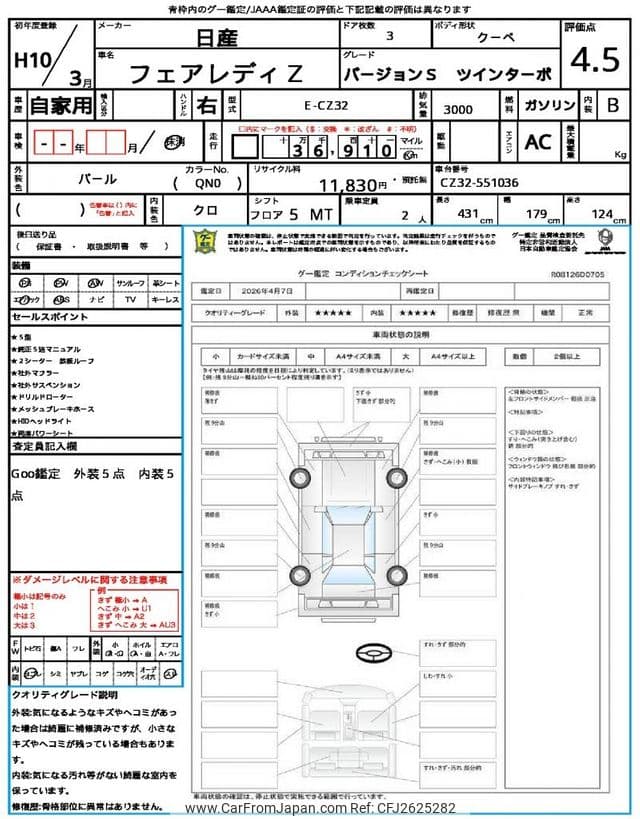
Overall Grade
4.5Minor blemishes but generally clean condition
Interior Grade
BVery clean and nice
Analysis
Strong buy for a Z32 enthusiast - low mileage, no repair history, clean grades, and desirable twin turbo manual specification make this an excellent candidate at the right price, but have the aftermarket components professionally inspected.
Interpret your auction sheet
How it works
Upload your sheet
Drag and drop a photo of your Japanese auction inspection report. Supports JPEG, PNG, and WebP.
AI reads every field
Our vision AI extracts grades, odometer, damage codes, features, repair history, inspector notes, and more.
Get a full interpretation
Receive a structured English breakdown with a condition analysis and a clear buying recommendation.
What is a Japanese auction sheet?
Every vehicle sold at a Japanese auto auction - through USS, TAA, JU, or any of the major houses - is accompanied by a standardised inspection report. An inspector examines the vehicle and records its overall condition grade, interior grade, feature list, damage codes mapped to a car diagram, repair history, odometer reading, and more. These sheets are the gold standard for assessing the condition of a used Japanese vehicle before import.
Who needs this tool?
Anyone importing or considering importing a Japanese Domestic Market (JDM) vehicle. Whether you're a private buyer purchasing your first import, a car enthusiast evaluating a specific variant, or a dealer assessing a batch, this tool translates every field - condition grades, damage codes, repair history flags, and inspection notes - into plain English with AI-powered analysis.
Understanding repair history
The most critical field on any auction sheet is 修復歴 (shūfuku-reki) - repair history. A mark of 有 means the vehicle has had structural repair: frame, pillar, or floor pan work. This is not the same as panel damage. Our tool always extracts and highlights this field prominently, because it has a significant impact on value, safety, and compliance.
Auction grades explained
Japanese auction grades run from 6 (new) down to 1 (heavily modified), with grades 0, A, and R indicating accident or structural damage. A grade 4 or 4.5 vehicle is considered very good - better than typical wear for its age. Interior is graded A to E. Learn the full grading system →